Breaking Down the Mechanics of Wheel Bias Detection in Physical Roulette Tables Over Extended Observation Periods
Written by Jakob Franke · Oct 11, 2026

Breaking Down the Mechanics of Wheel Bias Detection in Physical Roulette Tables Over Extended Observation Periods
Physical roulette wheels develop measurable biases when manufacturing tolerances, repeated use, or maintenance issues create uneven pocket depths, slight tilts, or friction variations along the ball track, and observers track these deviations through systematic recording of spin outcomes across thousands of rotations.
Core Principles Behind Wheel Bias Identification
Researchers document each landing position on the wheel while noting variables such as rotor speed, ball velocity, and drop point, then compile frequency counts that deviate from the expected 1/37 distribution for a European wheel or 1/38 for an American model, and statistical tools like chi-square analysis quantify whether those deviations exceed random fluctuation thresholds.
Extended sessions spanning multiple weeks allow patterns to stabilize because short samples often mask bias beneath normal variance, whereas cumulative data sets exceeding 10,000 spins sharpen the signal and reduce the probability that observed imbalances stem from chance alone.
Data Collection Protocols Over Long Timeframes
Casino staff or independent analysts log results using digital counters or manual tally sheets, cross-referencing each entry with timestamps that capture wheel condition changes after cleaning cycles or part replacements, and this granular logging supports later segmentation of data into pre- and post-maintenance blocks for comparison.
One documented case involved a European venue where technicians recorded outcomes nightly for four months, revealing a consistent over-representation of numbers clustered between 22 and 28, and follow-up engineering inspection confirmed a minor rotor warp that had developed gradually through normal operation.
Statistical Validation Techniques
Analysts apply sequential testing methods that update probability estimates after every hundred spins, and software packages calculate running confidence intervals that flag when a pocket's hit rate moves beyond three standard deviations from the mean, prompting deeper physical examination of the wheel assembly.
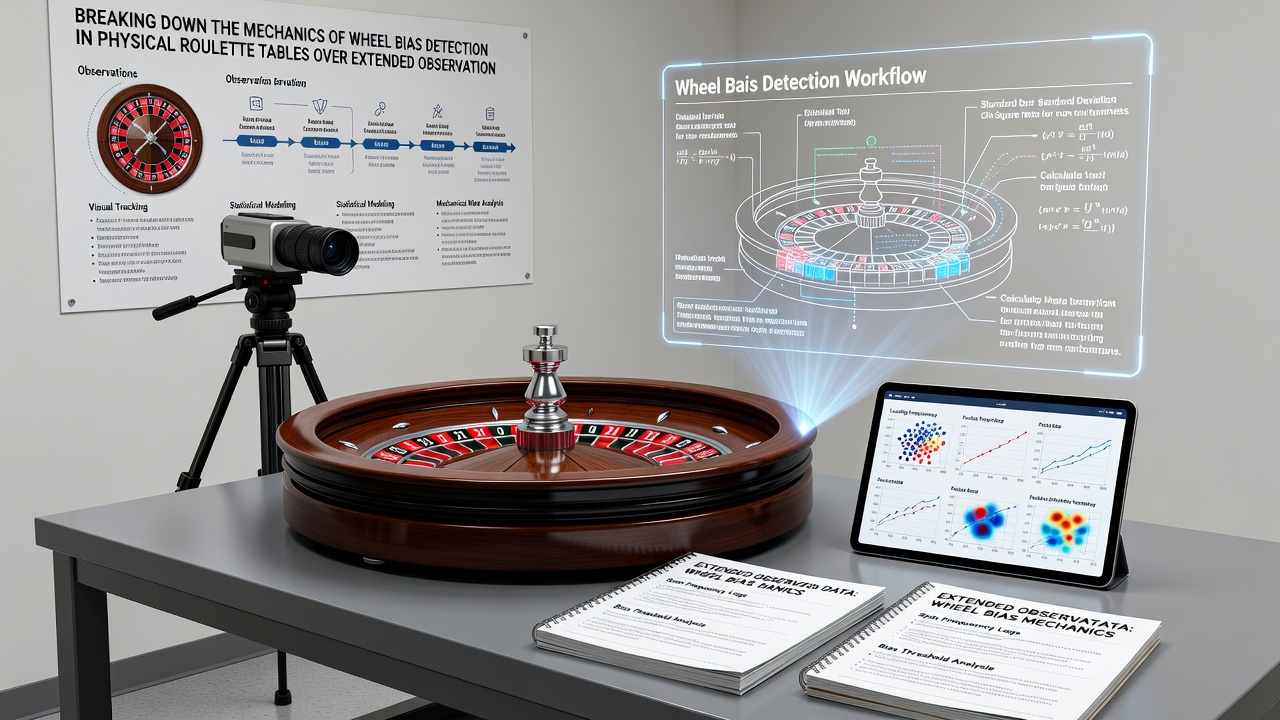
Cross-validation against independent data sets collected on different shifts or by separate teams confirms that detected biases persist across operators and time periods, while any anomalies tied to a single dealer or session get isolated and removed from the aggregate model.
Equipment and Environmental Factors
Temperature fluctuations, humidity levels, and even floor vibrations from nearby gaming activity influence ball behavior, so monitoring teams install sensors that log ambient conditions alongside spin data, and this multi-variable tracking isolates mechanical bias from external interference that could otherwise distort results.
Regulatory bodies such as the Nevada Gaming Control Board require periodic wheel inspections that incorporate bias testing protocols, and similar standards appear in reports issued by Australian state authorities overseeing casino operations.
Challenges in Distinguishing Bias from Randomness
Wheel bias detection demands careful separation of persistent mechanical advantages from temporary streaks, and observers therefore employ control charts that plot deviation trends against established control limits, triggering alerts only when sustained departures occur rather than isolated spikes.
Studies released in late 2025 by Canadian research institutions and updated with additional field data through October 2026 continue to refine sample-size requirements, showing that reliable bias identification typically needs at least 8,000 to 12,000 recorded spins under controlled conditions.
Conclusion
Systematic observation over extended periods, combined with rigorous statistical filtering and environmental logging, provides the foundation for identifying wheel bias in physical roulette tables, and ongoing refinements to these methods support consistent application across regulated gaming environments worldwide.