Exploring Variance Patterns in Sequential Wheel Spins Across Digital Platforms
Written by Jakob Franke · Aug 30, 2026
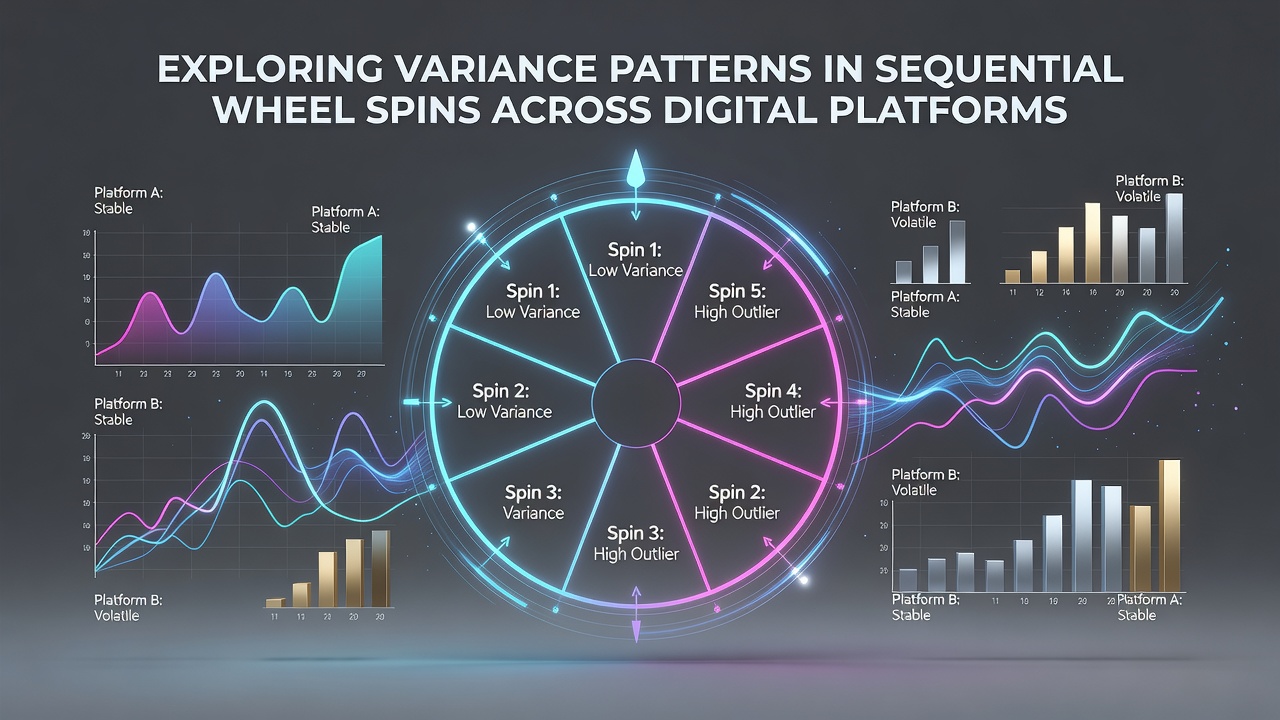
Exploring Variance Patterns in Sequential Wheel Spins Across Digital Platforms
Digital platforms hosting wheel-based games generate sequences of outcomes through random number generators, and variance patterns emerge when those sequences are examined over extended runs. Researchers track how individual results deviate from expected distributions, particularly when spins occur one after another without physical wheel interruptions. Data from multiple jurisdictions shows that these patterns differ based on the underlying algorithm design, platform architecture, and regulatory testing protocols that operators must follow.
Understanding Variance in Digital Wheel Systems
Variance measures the spread of actual results around theoretical probabilities, and sequential wheel spins on digital platforms produce measurable clusters and gaps that statisticians analyze for compliance and performance monitoring. Observers note that short-term runs often display higher volatility than longer sequences, yet the overall distribution tends toward equilibrium as the number of spins increases. Studies conducted by academic institutions demonstrate that properly certified random number generators maintain this balance while still allowing natural fluctuations that players encounter during typical sessions.
Platform Architecture and Its Influence on Spin Sequences
Software providers implement different approaches to generating wheel outcomes, and these choices affect how variance appears across consecutive spins. Some systems use cryptographic hash functions refreshed at high frequency, whereas others rely on seed values combined with time-based inputs. According to research from the University of Nevada, Reno, platforms using frequent reseeding show slightly lower short-sequence clustering compared with systems that retain longer seed cycles. Operators in regulated markets must submit these systems for independent laboratory evaluation, which confirms that the mathematical properties align with declared return-to-player percentages before deployment.
August 2026 brought updated testing standards in several North American jurisdictions, requiring operators to submit expanded datasets covering at least one million sequential spins per game variant. These requirements allow regulators to identify any persistent deviation patterns that might indicate implementation errors rather than normal statistical behavior. Figures from the New Jersey Division of Gaming Enforcement reveal that variance metrics remained within expected parameters across the majority of certified titles during the first half of that year.
Comparative Analysis Across Regions
European and Australian markets apply distinct certification frameworks that influence how variance data gets collected and reported. The Malta Gaming Authority requires quarterly submission of outcome logs, while Australian state regulators focus on continuous monitoring through centralized reporting systems. A 2025 report issued by the Australian Institute of Criminology examined digital wheel products across multiple operators and found that sequential spin variance aligned closely with theoretical models once sample sizes exceeded 500,000 spins. Differences between platforms tended to appear in the tails of the distribution rather than in central tendency measures.

Statistical Tools Applied to Sequential Data
Analysts employ several techniques to detect patterns within long spin sequences, including runs tests, autocorrelation functions, and spectral analysis. These methods help separate genuine statistical variation from any unintended periodicity introduced by flawed implementation. Research published by the Technical University of Denmark indicates that modern certified generators rarely exhibit detectable periodicity within practical sample sizes, though monitoring continues as computational power increases. Operators integrate these same tools into their internal compliance dashboards to flag anomalies before regulatory review occurs.
Platform updates introduced in 2026 incorporated real-time variance tracking that alerts technical teams when observed distributions drift beyond predefined control limits. Such systems do not alter game outcomes but provide early indicators that additional testing may be warranted. Data shared between operators and testing laboratories shows that these alerts occur infrequently and typically resolve after routine maintenance cycles or reseeding procedures.
Regulatory Oversight and Reporting Requirements
Regulators across different regions mandate specific documentation that details how variance behaves under operational conditions. The Nevada Gaming Control Board requires annual audits that include analysis of sequential spin records, while Canadian provincial authorities emphasize ongoing data feeds from live environments. Industry associations such as the European Gaming and Betting Association compile aggregated statistics that allow cross-border comparison of variance characteristics without revealing proprietary operator information. These compilations demonstrate consistent performance across certified digital wheel products regardless of the specific jurisdiction.
One documented case involved a platform that underwent voluntary recertification after internal monitoring detected minor clustering in a particular number range. Subsequent laboratory review confirmed that the clustering fell within acceptable statistical bounds and resulted from normal random variation rather than any system defect. The operator published summary findings, which contributed to industry-wide discussions about appropriate thresholds for sequential analysis.
Conclusion
Variance patterns in sequential wheel spins on digital platforms reflect the interplay between certified random number generation, platform architecture, and regulatory oversight. Data collected through 2026 indicates that properly implemented systems maintain expected statistical properties across extended sequences while permitting the natural fluctuations that define variance. Continued collaboration between operators, laboratories, and regulatory bodies supports ongoing refinement of monitoring techniques, ensuring that outcome integrity remains verifiable across jurisdictions.